WeeklyAd.io
Tokyo Central Weekly Ads & Flyers
3 active weekly ads for Tokyo Central. Last updated: May 27, 2026.
Tokyo Central Weekly Ad Regions
Tokyo Central is a coastal powerhouse, primarily focused on California and Hawaii. Its stores are often categorized into "Main" (large warehouse-style) and "Specialty" formats:
Southern California (The Core):
- Extensive footprint in Gardena (Main & Specialty stores), Costa Mesa, Irvine, Torrance, West Covina, and San Diego.
Northern California:
- Significant presence in Cupertino and the newest flagship in Emeryville (Bay Street), which serves the East Bay.
Hawaii:
- A vital regional hub in Kailua, often featuring an expanded selection of Hawaiian-Japanese fusion goods.
What You Can Find in the Tokyo Central Weekly Ad
The "Hand Roll Factory" & Sushi Bar: Unlike standard grocery sushi, Tokyo Central often features a "Hand Roll Factory" (specifically in locations like Emeryville) where chefs prepare authentic Temaki and Nigiri right before your eyes.
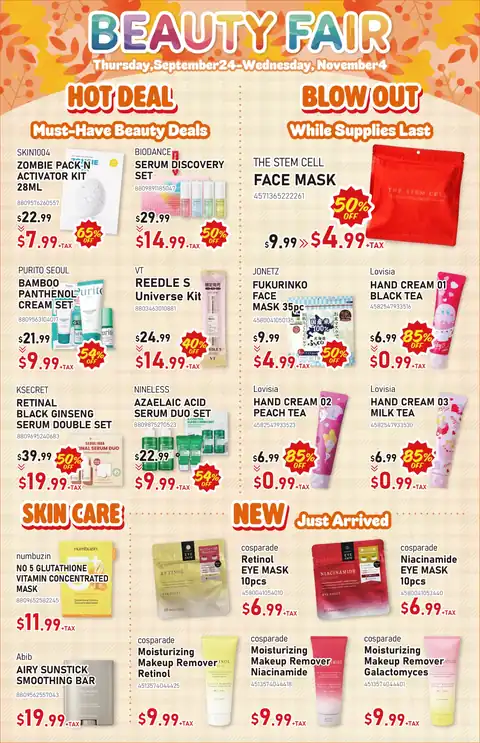
The Don Quijote Influence: Because of its parent company, Tokyo Central stocks unique Japanese "lifestyle" items you won't find anywhere else—ranging from high-end Japanese cosmetics and skincare to specialized kitchen appliances like Zojirushi rice cookers and Takoyaki makers.
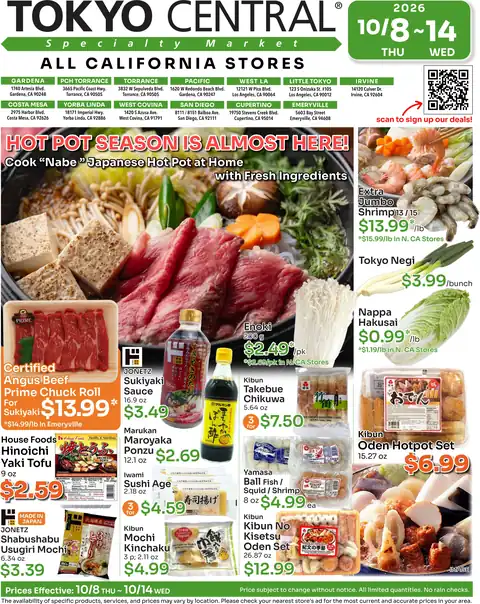
Wagyu & Thinly Sliced Meats: Their meat department is legendary for its USDA Prime and Japanese A5 Wagyu. They also specialize in "paper-thin" sliced beef and pork, which is essential for making authentic Shabu-Shabu or Sukiyaki at home.
Hawaiian Goods Integration: Due to its Marukai heritage, Tokyo Central carries a robust selection of Hawaiian favorites, including Poke, Hawaiian Sun drinks, and local snacks, making it a unique hybrid of Japanese and Island culture.
Insider Pro-Tips for Maximum Savings
The "7:00 PM Sushi Sprint"
- The Strategy: Visit the deli and sushi department exactly at 7:00 PM.
- The Hack: Most Tokyo Central locations begin marking down prepared sushi, bento boxes, and hot food by 20% at 7:00 PM to clear inventory before closing.
- The Value: If you wait until an hour before closing, these discounts can jump to 50% off, though selection will be limited.
The "Member Price" App Hack
- The Strategy: Never shop without the Tokyo Central App.
- The Hack: Tokyo Central uses a two-tier pricing system. Items labeled with a "Member Price" tag are significantly cheaper, but you only get the discount if you scan your digital membership code at checkout.
- The Value: Membership is generally free (or a very small one-time fee to transition an old physical card), and it is the only way to access the deeper discounts found in the Weekly Ad.
Thursday Ad Reset
- The Timing: The Tokyo Central Weekly Ad typically runs from Thursday to Wednesday.
- The Hack: Check WeeklyAd.io on Wednesday afternoon for the "Sneak Peek."
- The Pro-Tip: High-demand items like seasonal Japanese fruits (Persimmons, Fuji Apples) or specific Wagyu cuts sell out by Saturday. Shop on Thursday morning to ensure you get the front-page produce specials.
Shopping Tips for Tokyo Central
The "Seasonal Fruit & Flavor" Calendar
- Japanese grocery shopping is governed by the seasons. Tokyo Central imports premium fruits that are often only available for a few weeks a year.
- The Strategy: Add a "What’s in Season" tracker.
- The Insight: * Spring (March–April): Look for Sakura-flavored everything (KitKats, lattes, mochi) and the first arrival of Amaou Strawberries.
- Summer (June–August): Peak season for White Peaches and Japanese Crown Melons.
- Autumn (September–November): The arrival of Shine Muscat Grapes (seedless and sweet) and Persimmons.
- Winter (December–February): Yuzu season and the iconic Japanese Strawberry Shortcakes for the holidays.
The "Don Quijote" Treasure Hunt
- Since Tokyo Central is owned by the parent company of Don Quijote (Donki), they carry unique "lifestyle" items that are viral on social media.
- The Strategy: Highlight the "Donki Picks" department.
- The Insight: Mention the "Beauty & Wellness" aisle where users can find J-Beauty cult favorites like Hada Labo lotions, Biore UV sunscreens, and "Steam Eye Masks."
- The Value: Remind users to check the Gachapon (Capsule Toy) machines near the entrance—they often feature limited-edition Japanese collectibles that change monthly.
The "Bento & Sushi" Strategy
- The deli is the busiest part of the store. To save money and get the best quality, shoppers need to know the timing.
- The Strategy: Map out the "Markdown Cycle."
- The Insight:
- The Morning Rush (10: 00 AM – 11:30 AM): This is when the Bento boxes are freshest. If you want the premium "Chef’s Selection" Nigiri, go early.
- The 7 PM Sprint: As mentioned, the 20% to 50% markdowns begin in the evening. This is the best time for students or budget-conscious foodies to grab a high-end dinner for under $10.
- The "Hand Roll Factory": In flagship locations like Emeryville, users can order custom hand rolls one by one. Highlight the warm rice and toasted seaweed—it’s a "restaurant-quality" experience inside a supermarket.
The "Member vs. Guest" Pricing Loop
- The Tokyo Central Weekly Ad can be confusing because it often lists two prices.
- The Strategy: Add a "How to Read the Ad" guide.
- The Value: Explain that the Member Price (blue/gold tags) is only accessible through the app or a physical membership card.
- The Hack: Tell users to download the app before they get to the register to avoid holding up the line, as store Wi-Fi can sometimes be slow during peak hours.
- Unadvertised Tokyo Central "Hidden" Gems
- The "Clearance" Endcaps: Look for the endcaps near the household goods section. You can often find Japanese snacks or beauty products with "short-dated" labels marked down by 50% or more.
- Wagyu Trimmings: If you want the flavor of A5 Wagyu without the $100 price tag, look for "Wagyu Trimmings" or thin-sliced "off-cuts" in the meat department. They are perfect for fried rice or ramen toppings.
- Hawaiian "Zippy's" Chili: Because of their Marukai roots, Tokyo Central is one of the few places on the mainland to find frozen Zippy's Chili and Napoleon's Bakery items from Hawaii.
About Tokyo Central
Founded as a modern evolution of the Marukai Corporation, Tokyo Central is a premier Japanese supermarket chain owned by Pan Pacific International Holdings (PPIH)—the same retail giant behind the world-famous Don Quijote discount stores. Tokyo Central is designed to be more than just a grocery store; it is a "specialty destination" that brings authentic Japanese culture, food, and lifestyle products to the United States. In 2026, the brand has completed its transition of many legacy Marukai locations into high-tech, "experiential" markets that cater to both Japanese expats and local "foodie" communities.
Tokyo Central Weekly Ad FAQs
Does Tokyo Central accept EBT?
Generally, no. Historically, Tokyo Central (and Marukai) has not participated in the SNAP EBT program. While this policy can vary by specific county regulations, most shoppers find that EBT is not accepted at these locations. Always check with the customer service desk at your specific store to confirm.
Can I use my Marukai membership card at Tokyo Central?
Yes. Since Tokyo Central is the modernized brand for Marukai, your legacy Marukai membership is typically honored. However, it is highly recommended to transfer your membership to the Tokyo Central App to ensure you receive digital-only rewards and easier checkout.
Is there a "Bulk" section?
Yes, but it's different from a traditional US store. Instead of bins, look for the "Tokyo Central & Main" locations (like Gardena). These stores offer warehouse-sized bags of Basmati/Calrose rice, bulk soy sauce, and massive packs of Japanese snacks.
Does Tokyo Central offer delivery?
Yes. Tokyo Central has a strong partnership with Instacart for same-day delivery. Note that "Member Prices" found in-store may not always apply to third-party delivery orders unless ordered directly through the store's own digital portal.
Why is some fruit so expensive?
Japanese gift-giving culture values "perfect" fruit. The $20 strawberries or $50 melons are grown under strict conditions to be flawless in shape and flavor. They are intended as high-end gifts, not just snacks.
What is the "Japan Food Alley"?
In larger stores, the food court is branded as the "Japan Food Alley." It features rotating stalls like Kagura (Katsu) or specialty ramen shops. It’s the best place for an authentic hot lunch while you shop.
Do I need a membership to shop there?
No. Anyone can shop at Tokyo Central, but you will pay the higher "Guest Price" on many items. If you plan to spend more than $50, the membership usually pays for itself in a single trip.